

Skontaktuj się z nami
Zapraszamy do omówienia swoich wymagań zakupowych z naszym działem obsługi klienta.
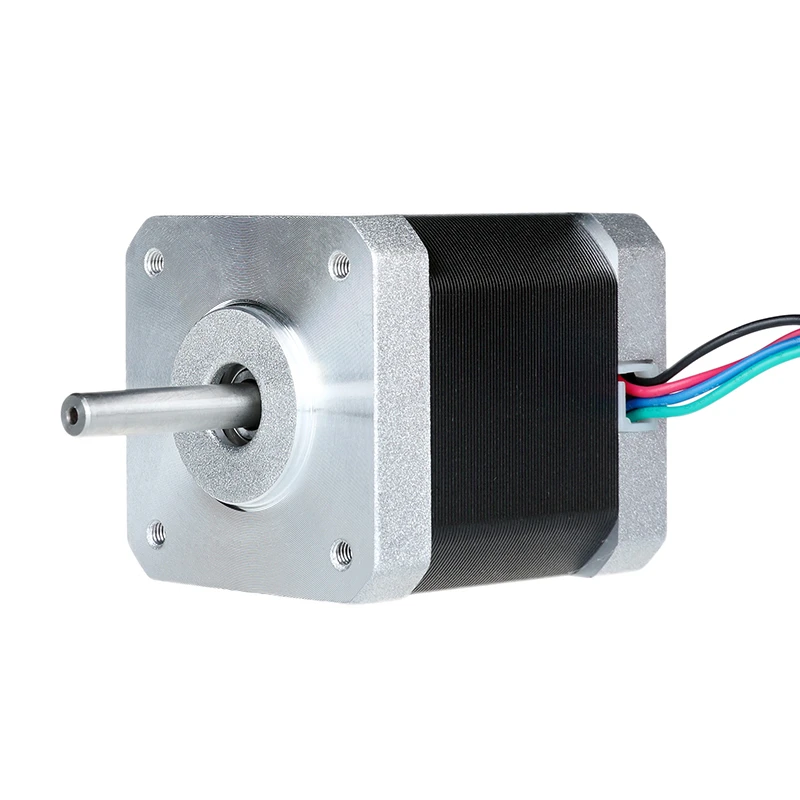
Stepper motor is a brushless, synchronous electric motor that converts digital pulses into mechanical shaft rotation. Its normal shaft motion consists of discrete angular movements of essentially uniform magnitude when driven from sequentially switched DC power supply. Stepper motor is a digital input-output device. It is particularly well suited to the type of application where control signals appear as digital pulses rather than analog voltages. One digital pulse to a stepper motor drive or translator causes the motor to increment one precise angle of motion. As the digital pulses increase in frequency, the step movement changes into continuous rotation. Some industrial and scientific applications of stepper motors include robotics, machine tools, pick and place machines, automated wire cutting and wire bonding machines, and even precise fluid control devices.
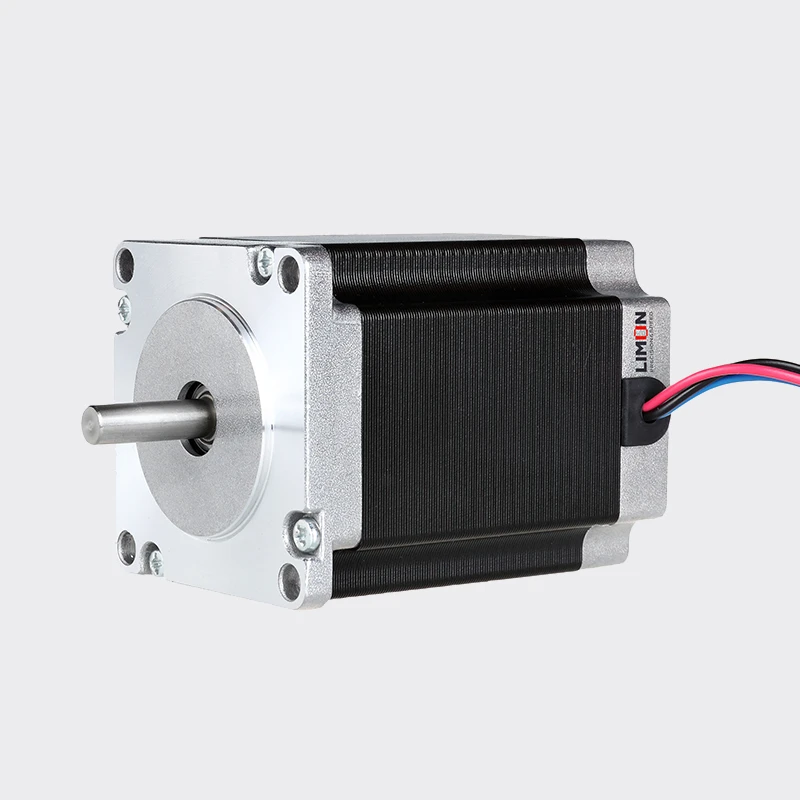
Every revolution of the Nema34 stepper motor is divided into a discrete number of steps, in many cases 200 steps, and the motor must be sent a separate pulse for each step. The stepper motor can only take one step at a time and each step is the same size.
Since each pulse causes the motor to rotate a precise angle, typically 1.8°, the motor’s position can be controlled without any feedback mechanism. As the digital pulses increase in frequency, the step movement changes into continuous rotation, with the speed of rotation directly proportional to the frequency of the pulses.
Stepper motors are used every day in both industrial and commercial applications because of their low cost, high reliability, high torque at low speeds and a simple, rugged construction that operates in almost any environment.
If we examine the construction of the stepper motor, we will see that there is no friction in the moving parts except this bearing, so this is the reason the Nema34 stepper motor survives for a long time. But again, motor use matters. The life of any motor depends on how we use the motor. More rigorous use of the motor can affect the life of the motor.
Holding Torque of any motor is a really important parameter. It should be as high as possible.
Holding Torque is the motor’s ability to maintain its original position after energizing the motor windings, even when a large amount of force is applied to the shaft of the motor.
It is also known as the stand stall torque of the motor. On top of this, the stepper motor has another capability that keeps the rotor in the same position when no current flows through the winding and this is called the Detent Torque of the motor.
Unike other motors, this type of motor will not increase your expenses on maintenance costs and the reason for this is that the stepper motor is a brushless type of motor. Unlike other motors, in this motors, you do not need to change the brush repeatedly. And so we can say that the this type of motor has a low maintenance cost.
To jedna z najlepszych cech silnika krokowego. Silnik krokowy ma zdolność powrotu do swojej pierwotnej pozycji po zakończeniu pełnego okrążenia. Ta cecha tego typu silników czyni je bardziej dokładnymi i najprzydatniejszymi silnikami w aplikacjach, w których priorytetem jest precyzyjna prędkość.
Silniki krokowe generują duży moment obrotowy przy niskich prędkościach. To sprawia, że są bardziej odpowiednie do zastosowań, w których wymagany jest wysoki moment obrotowy przy wysokiej precyzji.
Jeśli szukasz silnika, który dokładniej kontroluje obiekt, to jest to najlepsza opcja dla Ciebie. Jak omówiliśmy, silnik krokowy działa w systemie otwartej pętli, co oznacza, że w przeciwieństwie do innych silników, silnik krokowy nie wymaga enkodera, co sprawia, że jest mniej złożony i tańszy od innych silników.
Wybór silnika krokowego zależy od wymagań dotyczących momentu obrotowego i prędkości aplikacji. Użyj krzywej momentu obrotowego i prędkości silnika (znalezionej w specyfikacjach każdego napędu), aby wybrać silnik, który wykona zadanie. Każdy sterownik silnika krokowego w linii Omegamation pokazuje krzywe momentu obrotowego i prędkości dla zalecanych silników tego napędu. Jeśli Twoje wymagania dotyczące momentu obrotowego i prędkości mogą być spełnione przez wiele silników krokowych, wybierz sterownik na podstawie potrzeb Twojego systemu ruchu - krok/kierunek, samodzielny programowalny, analogowe wejścia, mikrokrokowanie - a następnie wybierz jeden z zalecanych silników dla tego kontrolera.
Lista zalecanych silników opiera się na szerokich testach przeprowadzonych przez producenta, aby zapewnić optymalne działanie połączenia silnika krokowego i kontrolera.
Aktualne zapotrzebowanie na hybrydowe silniki krokowe jest wciąż bardzo duże. Są one powszechnie stosowane w różnych urządzeniach automatyki, takich jak maszyny grawerujące, maszyny laserowe, obrabiarki CNC, maszyny tekstylne i odzieżowe, sprzęt medyczny, sprzęt pomiarowy, sprzęt do przetwarzania elektroniki, maszyny do pakowania i urządzenia. Na instrumencie. Hybrydowy silnik krokowy to silnik krokowy zaprojektowany poprzez połączenie zalet magnesów trwałych i reaktywnych. Dzieli się na silniki dwufazowe, trójfazowe i pięciofazowe. Kąt przesunięcia dla silników dwufazowych wynosi zazwyczaj 1,8 stopnia, dla trójfazowych 1,2 stopnia, a dla pięciofazowych 0,72 stopnia.
Wirnik hybrydowego silnika krokowego jest magnetyczny, dlatego moment obrotowy generowany przy tym samym prądzie stojana jest większy niż w przypadku reaktywnego silnika krokowego, a jego kąt przesunięcia jest zazwyczaj mniejszy. Dlatego ekonomiczne obrabiarki CNC zazwyczaj potrzebują używać hybrydowego silnika krokowego. Jednak struktura wirnika hybrydowego jest bardziej złożona, bezwładność wirnika jest duża, a jego prędkość jest niższa niż w przypadku reaktywnego silnika krokowego.